Gregório Semedo Higher Institute, Namibe Campus, held a debate alluding to Peace Day
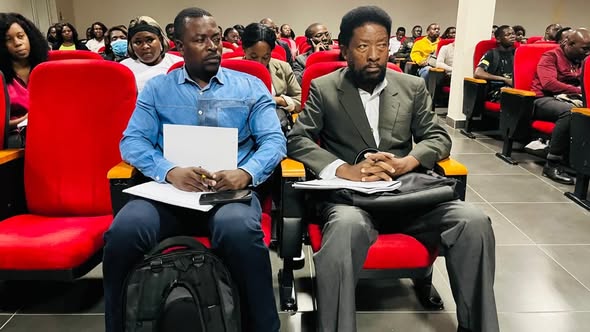
The event brought together academic professors, students, and specialists in History, Journalism, and International Relations, with the aim of reflecting on the process that culminated in the end of the Angolan civil war and the construction of a more stable society.
The round table, which focused on the peace agreements that marked the political and social transition of Angola, included the participation of History Professor Evaristo Tchali, Historian Martinho Nganga, and Journalist Elias Pedro Guito. Among the main points addressed, the Bicesse Accords (1991), the Lusaka Protocol (1994), and especially the 2002 Memorandum of Understanding, which officially ended the armed conflict after more than three decades of war, were highlighted.
The guests discussed the factors that facilitated the signing of these agreements, such as international mediation, pressure from organizations like the UN, and the essential role of Angola's political leadership in building dialogue. The difficulties and challenges faced by the country in the post-war period were also analyzed, including economic reconstruction, the integration of ex-combatants, and social pacification.
The Gregório Semedo Higher Institute, with its tradition of contributing to the development of knowledge and education, reaffirms its commitment to the formation of conscious citizens engaged in the process of building a peaceful and prosperous Angola.